Freedom of Choice
It started as a perfectly normal evening. I was on my way back to my hotel after sharing a wonderful dinner of sushi and sake with a former co-worker, laughing and catching up on life.
But when I stepped into the subway station, the warm, familiar feeling vanished.
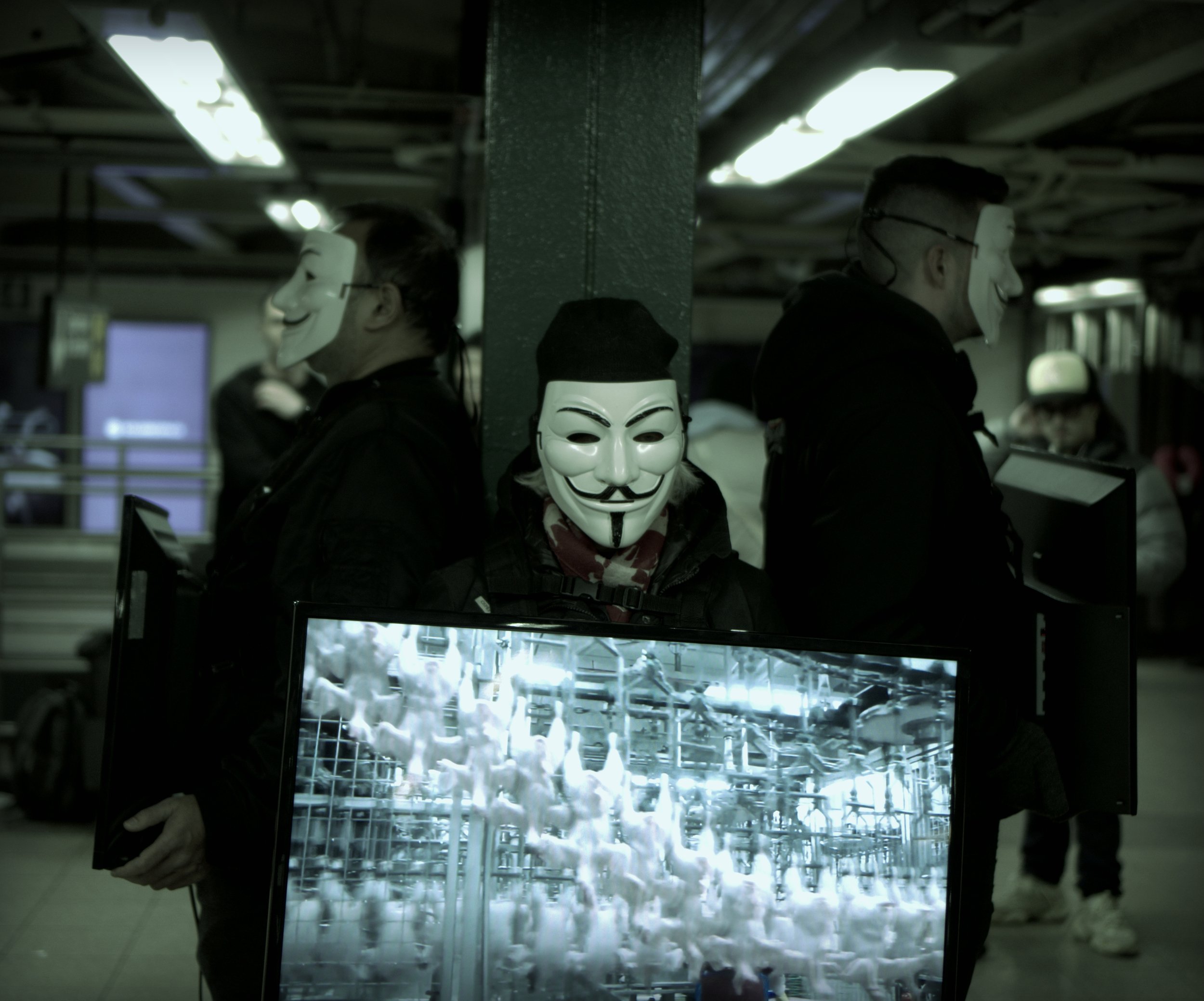
Standing in the middle of the busy terminal was a silent protest of masked individuals. They wore identical Guy Fawkes masks and held flat-screen monitors facing the crowd, looping unedited footage of mass-production chicken farms.
They didn't shout or hand out flyers. They simply let the quiet, disturbing screens do the talking.
I stood there for a moment, trying to decipher their exact message. Were they protesting the mass-production of meat, implying that giant corporations are profiting off animal slaughter, fighting for animal rights, or advocating for a vegan lifestyle?
I didn't have the answers, but the silence of the protest followed me onto the train.
As the subway rattled along, the fresh taste of my sushi dinner suddenly felt complicated. I found myself questioning everything: Am I wrong to eat meat? Am I wrong to buy from major corporations? Am I wrong to consume pork, beef, and shrimp?
Beneath all of these questions lay a more fundamental puzzle: What makes me feel right to eat, and who gets to decide?
Walking the quiet path back to my hotel, the noise in my head finally began to clear.
In a world constantly screaming for our attention and trying to dictate what is moral, healthy, or right, I realized that we must protect the free world of our own minds. The protest had successfully challenged me to think, but it did not have to dictate my life.
True freedom of choice means looking at the hard realities of the world, listening to our own bodies, and having the liberty to make a rational, conscious decision that is entirely our own.